
An OTP (one-time password) is a short, single-use code, usually 4 to 8 digits, sent by SMS, voice call, or email to confirm a user is who they say they are. It expires within minutes, so a stolen password alone can't open an account. Most common OTP types: SMS, voice call and email. For businesses, OTPs strengthen security, reduce account hacking risk, and keep sign-in simple at low cost. They're widely used in e-commerce, banking, telecoms and SaaS.
A stolen password shouldn't be enough to open your customers' accounts. A one-time password (OTP) makes sure it isn't. You've most likely used one this week: logging in to a bank, resetting a password, confirming an order.
We'll cover what it is and how it works, the benefits, and common use cases.
What is OTP verification?
An OTP (one-time password) is a short, single-use code, usually 4 to 8 digits long, sent to a user. The user then enters it into an app or website to verify that they have access to the phone number or other contact method to which the code was sent. The code expires after a short period, often a few minutes, and cannot be used again.
Because the code is different every time, a stolen or guessed password is no longer enough to get into an account.
How OTP verification works
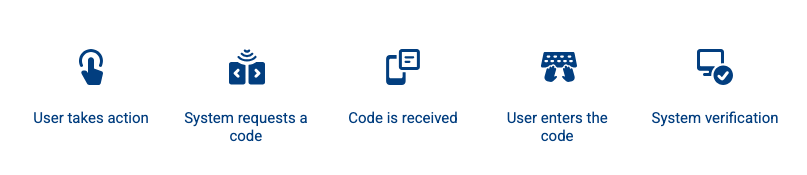
- The user takes an action, such as signing up, logging in, or resetting a password.
- Your system requests a code. It generates a random code and sends it to the user's phone number.
- The user receives the code by SMS, a voice call, email, etc.
- The user enters the code.
- Your system checks it. If the code matches and hasn't expired, access is granted. If not, it is rejected.
A few settings decide whether a verification flow feels smooth or frustrating:
- Code length and expiry: Six digits is a common choice, within the usual 4 to 8 range, with codes that expire after a few minutes. A short lifetime limits the window for misuse.
- Resend cooldown and retry limits: Wait 30 to 60 seconds before allowing a resend, and lock the request after a small number of wrong entries, for example 3 to 5. This blocks guessing and keeps message costs under control.
- Your app name in the message: Start the text with your brand name so users know the code is genuinely from you.
- Auto-fill formats: Format the message so phones can enter the code for the user. On Android, include your app’s SMS Retriever hash; on iOS, end the message with @yourdomain.com #123456. Nobody has to type the code.
With DIDWW’s OTP Verify, code length, timeout and message templates are settings you choose, not something you have to build.
Most common OTP delivery channels
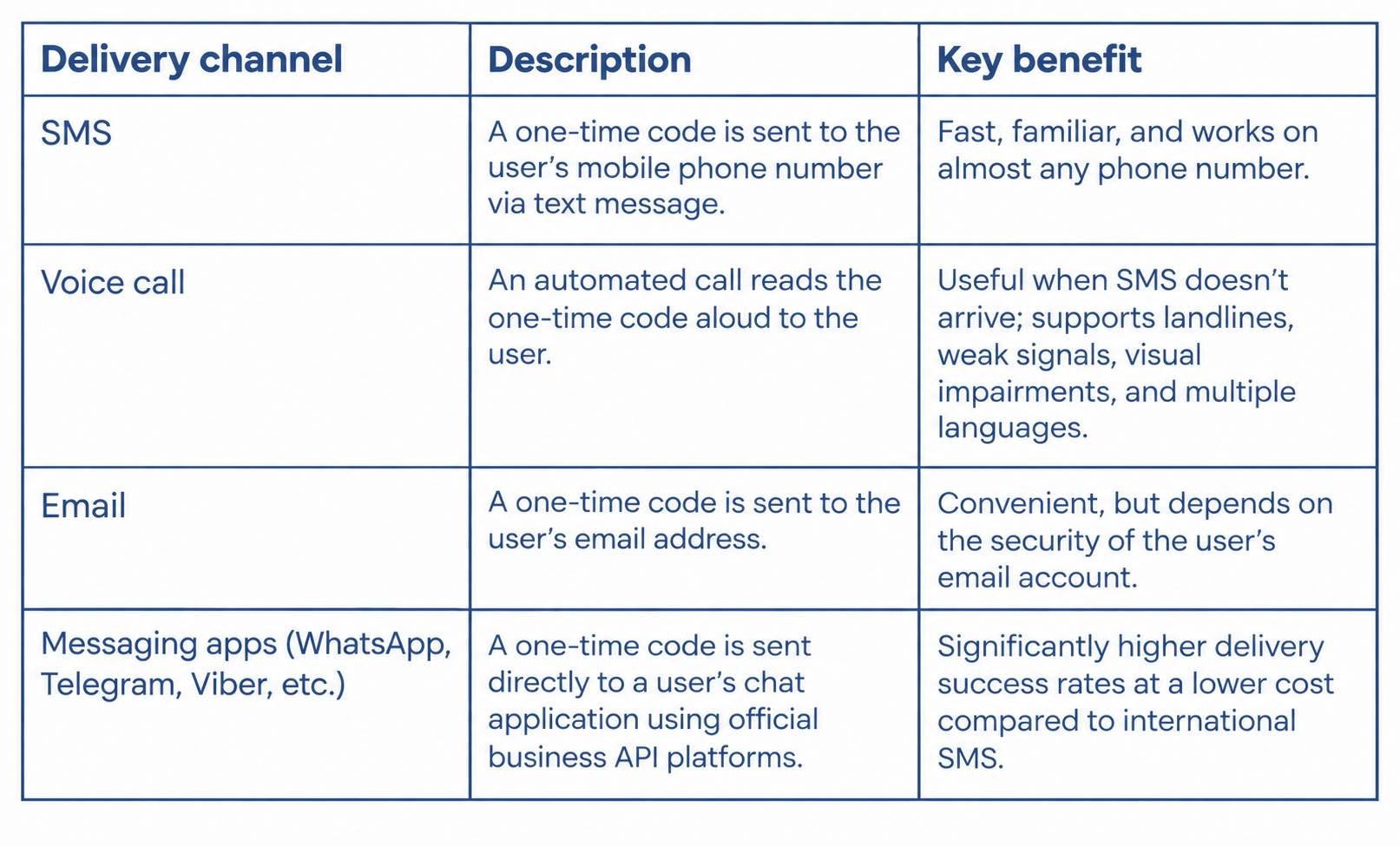
The best OTP delivery channel is the one that is convenient for your users, so match the channel to the people, and provide several delivery channel options - not just one.
The benefits of OTP verification
Used well, one-time passwords (OTPs) give businesses significant advantages.
Significantly reduces unauthorized access
Even if an attacker obtains a user’s password or login credentials, they still need the current OTP to gain access. This extra layer of security significantly reduces the risk of unauthorized access and data breaches.
Protects sensitive actions
A code is required before a password reset, address change, or new device login. A stolen session can’t receive it, so the account stays in the owner’s hands.
User-friendly authentication
Unlike complex password requirements that frustrate users, OTPs are typically short and easy to enter - simplifying the process.
Cost-effective security layer
OTPs are a cost-effective way to boost security. They require no expensive hardware or complex infrastructure and can be delivered via SMS, email, or mobile apps - making stronger security accessible to businesses of any size.
Use cases
Each industry has its own reasons for implementing OTP verifications, key industries using OTP include:
E-commerce and retail
- Authenticating user sign-ins from unrecognized or new devices.
- Authorizing updates to saved shipping addresses or payment methods.
- Confirming high-value orders before fulfillment processing.
Banking and financial services
- Logging into online banking or financial mobile apps.
- Approving large fund transfers and wire payments.
- Verifying newly added payees or external beneficiaries.
- Confirming card-not-present online purchases or setting changes.
Telecommunications and SaaS providers
- Confirming port-out or SIM-change requests via voice or an existing verified channel.
- Validating requests to activate new SIM cards or devices.
- Confirming profile changes or plan upgrades.
- Verifying sign-ups for free trials and paid subscriptions.
Why choose DIDWW’s OTP Verify API?
OTP Verify lets you send and verify one-time codes with monitored delivery, wide coverage and simple pricing. Your codes travel over DIDWW’s licensed carrier network, so you can see how they perform from send to delivery. OTP Verify API ensures:
- Reliable delivery: Codes are sent over tier 1 voice and SMS routes, so they reach your customers when they need them.
- Wide coverage: SMS in 73 countries and 41 languages, with flexible sender IDs where available; voice in 53 countries and 49 languages.
- Fast integration: Go live in hours with APIs and SDKs for Ruby, Node.js, Android, iOS, React Native and Dart/Flutter, and choose SMS or voice per request.
- Configurable codes: Set code length and timeout, and use custom message templates with your app name.
- Fraud protection (coming soon): Fraud Guard adds per-country and per-channel controls, high-risk tagging, and daily and monthly verification limits to help stop SMS pumping.
- Transparent pricing: Successful verification fee plus your chosen delivery channel's fee. No hidden costs, no surprises.
- Performance insights: Track delivery rates, latency and conversion by channel and country, with a simple fee per successful verification plus your delivery channel’s fee.
Special offer available: No fee for OTP verification until January 1, 2027. Pay only for SMS messages sent and call minutes used.
So don’t wait, try out OTP Verify today. For setup instructions, please refer to our detailed documentation. If you have any questions, contact us at sales@didww.com or reach out via our live chat at any time.
Conclusion
OTP verification is a small step in the customer journey that carries a lot of weight. It protects accounts and keeps sign-in simple, but its impact on growth depends on one thing: whether the code arrives. Choose a provider on delivery quality, coverage in your markets, and clear pricing, and verification stops being a risk and starts supporting your growth.